The hidden emotional stages women experience when leaving their 20+ year family home, and how to honour the process while moving forward confidently
From Randy Molnar - Founder RightSize Your Life Services

Ready to explore your options in rightsizing your life? Book your RightSize Your Life Consult
You've been putting it off for months, maybe even years. The thought of leaving the house where you raised your children, celebrated holidays, and built a lifetime of memories feels overwhelming. If you're like most women facing this transition, you're probably wondering: Am I being too emotional about this? Why does leaving feel so much harder than I expected?
The truth is, you're not being "too emotional", you're experiencing a completely normal, deeply human response to one of life's most significant transitions. Leaving a family home after 20+ years isn't just moving addresses; it's releasing an entire chapter of your identity.
Let's walk through what you're really experiencing and, more importantly, how to honor this process while stepping confidently into your next chapter.
Understanding the Emotional Journey You're On
When you've lived somewhere for decades, that house becomes more than four walls, it becomes the container for your life story. The emotional process of leaving follows a predictable pattern that mirrors grief itself, and recognizing these stages can help you navigate them with greater self-compassion.
Stage 1: Denial and Resistance
"Maybe we don't actually need to move..."
Initially, you might find yourself holding onto possessions "just in case" or repeatedly questioning whether the move is truly necessary. This isn't procrastination, it's your mind's protective response, giving you time to process before moving forward.
You might catch yourself thinking:
- "The market isn't right for selling"
- "We can just renovate instead"
- "Maybe if we just declutter a bit..."
This stage is completely normal. Your psyche is protecting you from the full weight of change all at once.
Stage 2: Sadness and Grief
"I can't believe I'm really leaving..."
As reality settles in, the sadness hits. This grief is particularly profound because you're not just leaving a house, you're leaving the physical space where you:
- Brought babies home from the hospital
- Hosted countless family dinners
- Comforted children through heartbreak
- Celebrated milestones and achievements
- Built traditions and memories

This sadness isn't something to minimize or rush through. It reflects the genuine significance of what you're releasing.
Stage 3: Anger and Resentment
"Why do I have to be the one dealing with all this?"
Following sadness, many women experience unexpected anger. You might feel:
- Frustration at having to uproot your life
- Resentment about the necessity of leaving
- Anger at family members who "don't understand"
- Irritation at the complexity of the process
This anger is legitimate and deserves acknowledgment rather than suppression. It's your spirit asserting that this transition matters, that what you're leaving behind has value.
Stage 4: Acceptance and Perspective
"Okay, I can see how this might work..."
This is the turning point where your shoulders drop and you begin to see the situation more clearly. You're no longer fighting the reality but rather beginning to embrace it. You may still miss aspects of your former home, but you've gained perspective and can recognize the potential gifts in this new chapter.
Stage 5: Peace and Moving Forward
"I'm actually excited about this next phase..."
Finally, you reach a state where the transition feels integrated into your life story rather than a rupture in it. This stage brings not just acceptance but genuine peace: and often, unexpected joy in your new environment.
Why This Process Hits Women Particularly Hard
If you're wondering why this feels so intense, there are real reasons why women often experience leaving the family home differently than men, particularly if you've been the primary caregiver or emotional anchor of family life.
The home represents more than shelter: it's often intertwined with your identity. If "mom," "caregiver," or "family organizer" was your primary role for decades, leaving the physical space where you enacted that role can trigger an identity crisis. You may suddenly face the question: Who am I now?
This transition often occurs alongside other major life changes:
- Adult children establishing independent lives
- Retirement or career changes
- Health considerations
- Menopause and hormonal shifts
These compounding factors can intensify the emotional weight of leaving your family home.

How to Honor This Process (Instead of Rush Through It)
Acknowledge Your Emotions Openly
Rather than minimizing your feelings as "being silly," create space for them to exist. Your grief is valid. Consider:
- Journaling about your memories and feelings
- Talking with trusted friends who understand
- Working with a therapist if you feel stuck
Speaking your feelings aloud validates their importance and helps you process them more effectively.
Create Meaningful Rituals of Closure
Intentional rituals help mark the significance of this transition:
- Document meaningful spaces with photos or videos
- Write letters to different rooms expressing gratitude
- Host a farewell gathering with family and friends
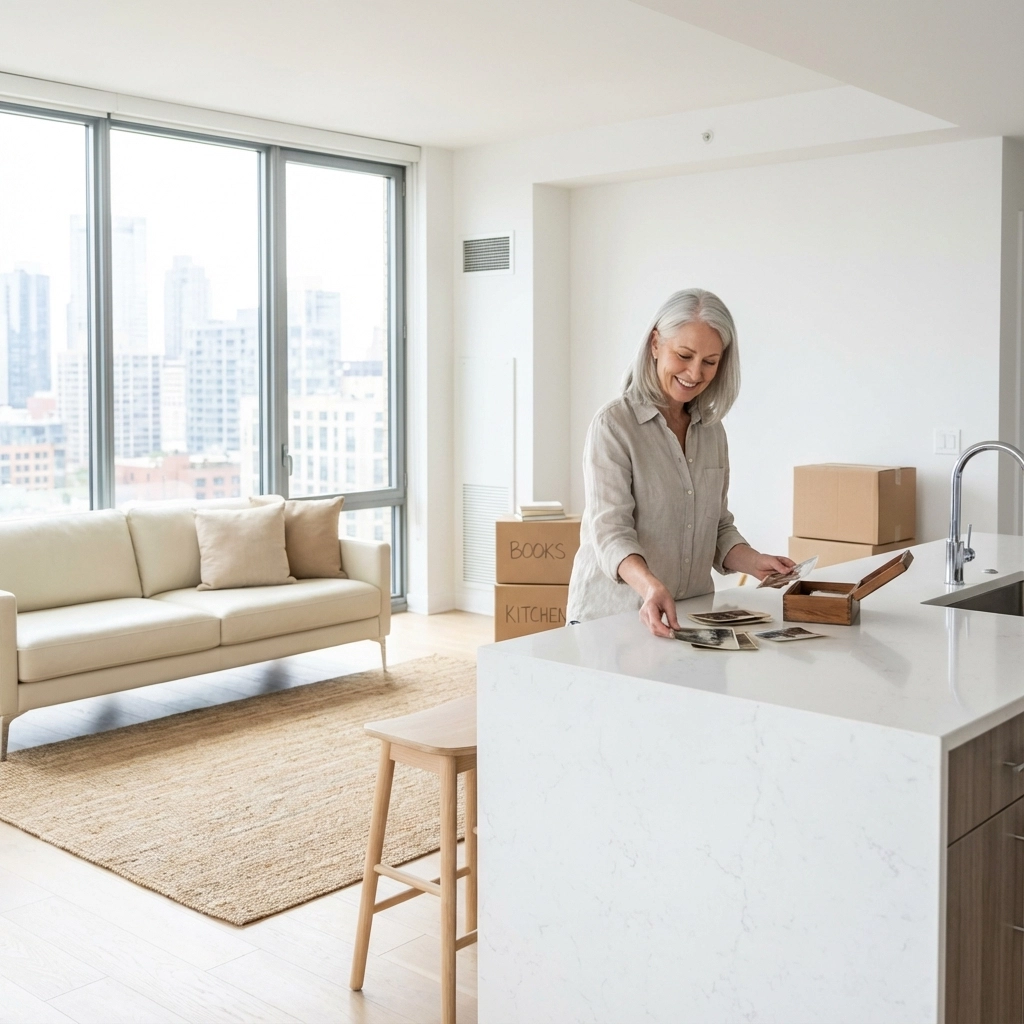
- Create a memory box with mementos from the home
- Take something special with you: a door knocker, light fixture, or piece of trim
These acts honor what the space meant to you and create a bridge between old and new chapters.
Involve Your Family in the Process
Adult children may also feel emotional about the family home, even if they've moved out. Early, honest communication helps everyone process the transition together and often reduces guilt: both yours about leaving and theirs about losing a childhood landmark.
Consider having conversations about:
- Which items hold special meaning for family members
- How to preserve important memories
- What aspects of "home" can be recreated in your new space
Reframe Your Identity Consciously
Use this transition as an opportunity to explore who you are beyond the roles you've inhabited in that home. Ask yourself:
- What interests have I postponed?
- What new version of myself might emerge?
- How can I honor my past while embracing my future?
This isn't about erasing your past identity but expanding it.
Moving Forward with Confidence
Remember That Confidence Doesn't Mean Feeling "Fine"
Moving forward confidently doesn't mean feeling unburdened or emotionally neutral about the move. It means trusting that moving through all these stages: including the difficult ones: is healthy and necessary. Each stage serves a purpose in helping you psychologically integrate this change.
Find Healthy Outlets for Your Emotions
Channel your feelings productively through:
- Physical activity that releases stress
- Creative expression like art, music, or writing
- Volunteering in your new community
- Social activities that build new connections
These activities honor your feelings while simultaneously building investment in your new environment and identity.
Seek Support When You Need It
If you feel overwhelmed or stuck in any particular stage, professional support can be invaluable. A therapist, coach, or support group can help you process the deeper identity questions and provide tools for moving through grief more skillfully.
Recognize the Hidden Gifts
As you settle into acceptance, you'll likely discover unexpected benefits:
- Freedom from maintaining a large home
- Opportunity to design a space reflecting your current self
- Chance to deepen community connections in a new neighborhood
- Relief of simplified living
- Energy freed up for new pursuits and relationships
These gifts often surprise women who expected only loss.
Your Next Chapter Awaits
The process of leaving a 20+ year family home isn't something to rush through or minimize. It's a significant life transition that deserves respect, time, and intentional care. By honoring each emotional stage, creating meaningful closure, and consciously building a new identity, you move forward not by forgetting what was, but by integrating it into a fuller understanding of yourself.
You're not losing your past: you're carrying its essence with you into a future that holds possibilities you can't yet imagine. The woman who lovingly created that family home is the same woman who has the wisdom, strength, and love to create meaning and joy in whatever comes next.
Trust the process. Trust yourself. Your next chapter is waiting, and you're more ready for it than you know.
Ready to take the next step in your rightsizing journey? Contact our team to explore your options with compassion and expertise.